
 Reed Jason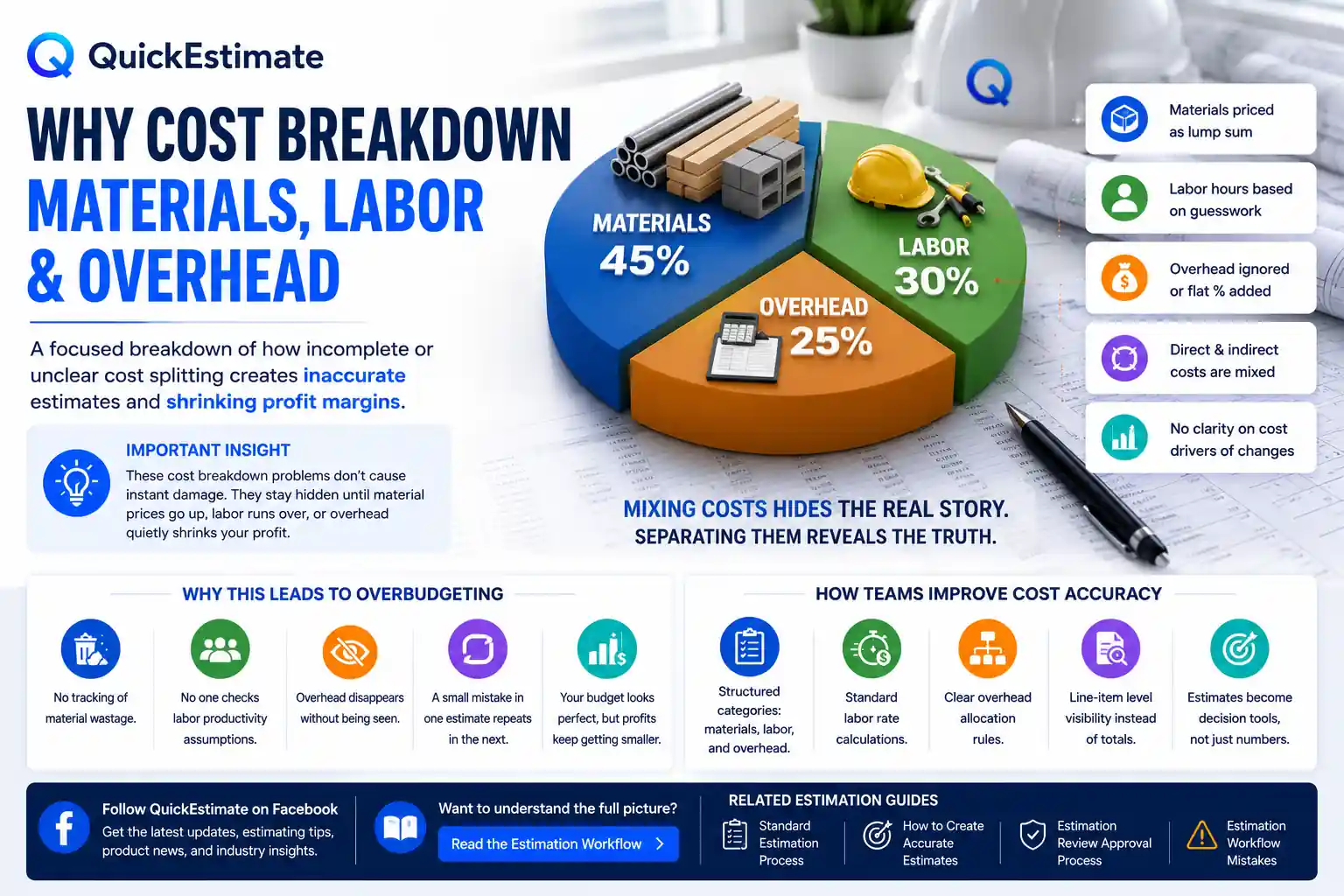
These estimation workflow challenges are covered in depth in the complete
Estimation Workflow →
Most estimates include a final number, but the real financial risk begins when that number is not properly separated into materials, labor, and overhead.
Without a structured cost breakdown process, estimates may appear correct on paper while quietly creating hidden financial problems during execution.
Where Cost Breakdowns Usually Fail
Most estimating problems are not caused by missing information. The larger issue is lack of visibility into where costs are actually coming from and how they behave during project execution.
- Materials are estimated using lump-sum pricing
- Labor hours are based on assumptions instead of calculations
- Overhead is ignored or applied inconsistently
- Direct and indirect costs become mixed together
- No visibility into cost drivers and changes
Cost breakdown issues usually stay hidden until material prices increase, labor productivity drops, or overhead quietly consumes the project margin.
Why Visibility Matters More Than Totals
A total estimate value may look correct while hiding serious financial weaknesses underneath. Without clear separation between materials, labor, and overhead, teams lose visibility into where profit leakage actually occurs.
Reliable estimating requires understanding how every cost category behaves — not just knowing the final total.
Why Poor Cost Splitting Leads to Overbudgeting
When material costs, labor assumptions, and overhead expenses are blended together, true project costing becomes difficult to measure and control.
| Missing Visibility | Operational Result |
|---|---|
| No tracking of material wastage | Higher purchasing costs |
| Labor assumptions not validated | Reduced productivity accuracy |
| Overhead blended into totals | Hidden margin reduction |
| No line-item cost visibility | Difficult project analysis |
| Errors repeated across estimates | Chronic overbudgeting |
A budget can appear healthy every month while profits quietly shrink underneath due to hidden cost leakage.
How Small Cost Errors Quietly Grow
Small estimating mistakes often repeat across future projects because teams cannot clearly identify which part of the estimate caused the issue.
Once blended cost structures become normal, organizations lose the ability to learn from past project performance effectively.
A small mistake hidden inside one estimate frequently becomes a repeated operational problem across many future projects.
How Teams Improve Cost Accuracy
Teams that improve estimating accuracy focus on creating structured visibility into each cost category rather than relying on totals alone.
- Separate materials, labor, and overhead clearly
- Use standardized labor rate calculations
- Create clear overhead allocation rules
- Introduce line-item level visibility
- Track estimate accuracy against actual project outcomes
Well-structured estimates become decision-making tools — not just final numbers prepared for approvals.
Frequently Asked Questions
Separating costs improves visibility into pricing accuracy, productivity assumptions, overhead allocation, and project profitability drivers.
Blended costs hide material wastage, labor productivity issues, and overhead leakage, making it difficult to identify the true cause of budget problems.
Without line-item visibility and structured cost tracking, organizations cannot clearly identify where estimating mistakes originated, causing the same issues to repeat across projects.
Structured breakdowns improve decision-making, increase pricing visibility, strengthen margin protection, and help teams compare estimates against actual project performance more effectively.