
 Micheal Torres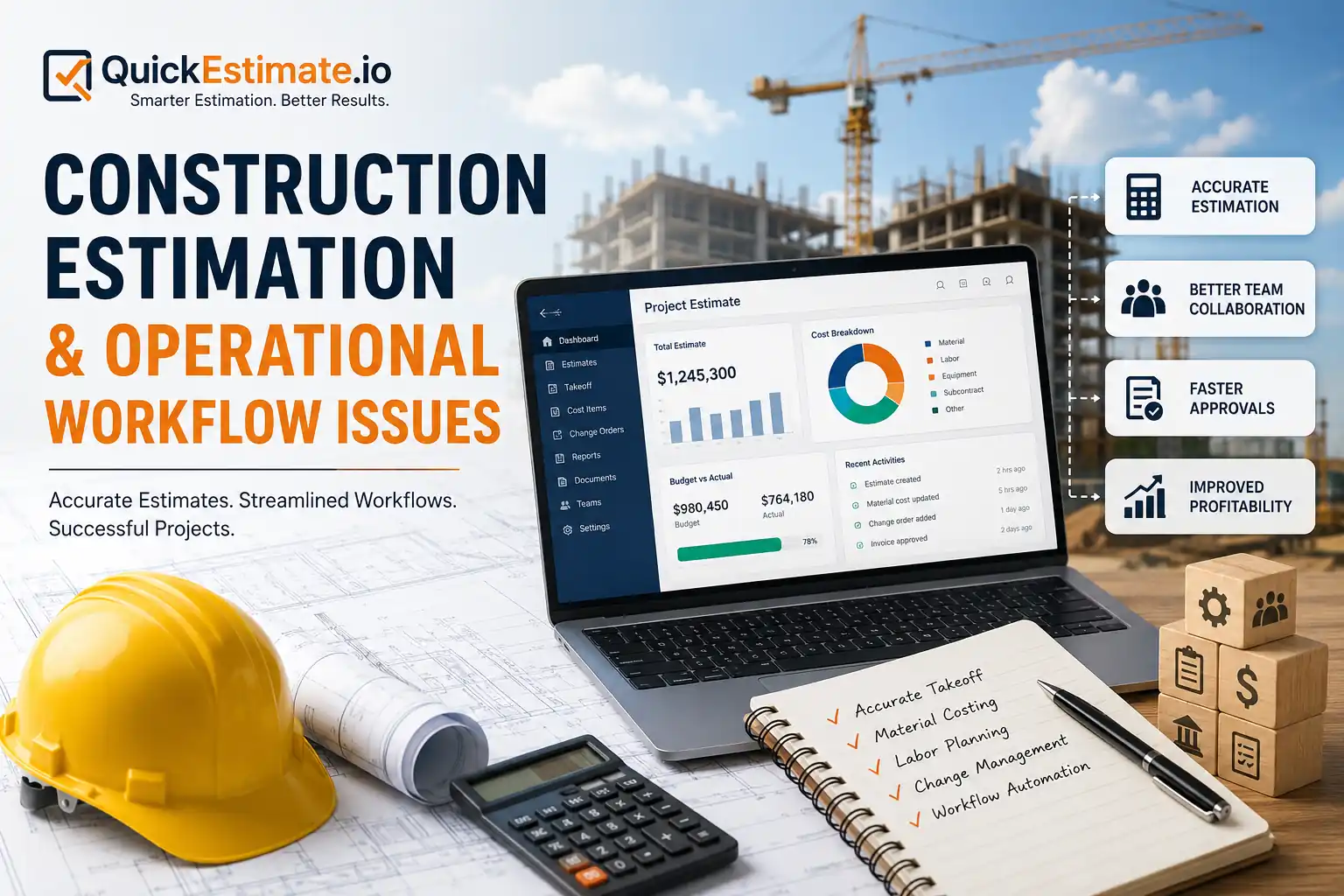
These workflow and estimation challenges are covered in depth in the complete
Estimation Problems Guide →
Construction estimation and operational workflow issues are among the biggest challenges faced by contractors, builders, project managers, and construction companies today.
Poor estimation accuracy and inefficient workflows often lead to budget overruns, project delays, communication gaps, operational confusion, and reduced profitability across construction projects.
Modern construction companies are increasingly focusing on improving estimation systems, workflow automation, communication visibility, and operational coordination to reduce errors and improve project delivery performance.
Understanding Construction Estimation
Construction estimation is the process of calculating the expected costs, labor requirements, materials, equipment, resources, and timelines required to complete a construction project successfully.
A well-structured estimate helps construction companies:
- Win profitable projects
- Reduce financial risks
- Improve project planning
- Manage resources efficiently
- Build stronger client trust through accurate pricing
Construction estimation problems rarely appear immediately. They quietly grow through disconnected workflows, outdated spreadsheets, communication gaps, and missing operational visibility.
Many organizations still rely on manual spreadsheets, disconnected communication channels, and outdated approval systems that create operational bottlenecks and reduce project efficiency.
Common Construction Estimation Issues
1. Inaccurate Material Calculations
One of the biggest problems in construction estimation is incorrect material quantity calculations. Even small estimation mistakes can significantly increase project costs.
Common causes include:
- Manual calculations
- Outdated pricing information
- Lack of supplier coordination
- Estimating based on assumptions
This often results in:
- Material shortages
- Emergency purchasing costs
- Budget overruns
- Project delays
2. Labor Cost Mismanagement
Labor forecasting becomes difficult without structured planning, scheduling, and workforce tracking systems.
Incorrect labor hour estimation, overtime issues, poor scheduling, and workforce skill mismatches often reduce operational efficiency and destabilize profit margins.
3. Lack of Real-Time Cost Updates
Construction pricing changes frequently because of:
- Material shortages
- Vendor pricing changes
- Fuel cost fluctuations
- Market instability
Companies using static spreadsheets often fail to update estimates in real time, resulting in outdated project budgets and inaccurate forecasting.
4. Poor Communication Between Teams
Construction operations involve multiple stakeholders:
- Estimators
- Project managers
- Site supervisors
- Procurement teams
- Contractors
- Clients
Without centralized communication systems, information becomes fragmented, creating approval delays, duplicate work, purchasing mistakes, and operational confusion.
5. Change Order Management Problems
Construction projects often involve scope changes after initial approval.
Without structured workflows:
- Change requests are not tracked properly
- Additional costs are missed
- Teams continue using outdated plans
- Billing disputes increase
Effective workflow systems maintain complete change order visibility, approval history, and updated estimate tracking.
Operational Workflow Issues in Construction
1. Manual Document Handling
Many companies still manage contracts, blueprints, RFIs, inspection reports, and purchase orders through email threads or physical paperwork.
| Manual Workflow Problem | Operational Impact |
|---|---|
| Version confusion | Incorrect project execution |
| Missing documents | Approval and compliance risks |
| Slow communication | Delayed project progress |
| Manual approvals | Operational bottlenecks |
2. Lack of Workflow Automation
Without workflow automation:
- Tasks are forgotten
- Follow-ups are delayed
- Approval cycles become slower
- Teams depend on manual reminders
Automation helps construction companies assign responsibilities, monitor progress, send notifications, and track deadlines automatically.
3. Inefficient Project Tracking
Construction managers often struggle to track:
- Budget consumption
- Daily project progress
- Workforce productivity
- Equipment utilization
Without centralized dashboards and reporting systems, decision-making becomes reactive instead of proactive.
4. Delayed Approvals
Construction operations rely heavily on approvals:
- Client approvals
- Vendor approvals
- Inspection approvals
- Material approvals
Manual approval systems often slow project execution unnecessarily.
How Technology Solves Workflow Problems
Modern construction management platforms help businesses streamline both estimation and operational workflows.
- Centralized project management
- Real-time cost tracking
- Workflow automation
- Document version control
- Improved team collaboration
- Advanced reporting and analytics
Digital workflow systems improve project coordination, reduce operational errors, and create better visibility across all project stages.
Best Practices for Improving Estimation & Operations
Construction companies improving operational efficiency usually focus on:
- Standardized estimation templates
- Digital document management systems
- Automated approval workflows
- Historical project data tracking
- Regular cost review processes
- Improved team communication systems
Solving construction estimation and workflow problems requires stronger communication, automation, standardized workflows, and real-time operational visibility.
Final Thoughts
Construction estimation and operational workflow management directly impact profitability, project success, operational efficiency, and client satisfaction.
Businesses that continue relying on outdated manual systems often experience budget overruns, communication gaps, project delays, and operational inefficiencies.
By implementing structured workflows, centralized project management systems, workflow automation, and real-time estimation platforms, construction companies can improve productivity, reduce risk, and scale more efficiently.
In today’s competitive construction industry, accurate estimation and optimized operational workflows are no longer optional — they are essential for long-term growth and successful project delivery.
Frequently Asked Questions
Construction estimation workflows improve project coordination, budgeting accuracy, operational visibility, and communication between teams while reducing project risks.
Common causes include outdated pricing, spreadsheet errors, poor communication, manual calculations, missing scope items, and disconnected workflows.
Workflow automation improves accountability, reduces delays, tracks approvals, assigns responsibilities automatically, and improves operational efficiency.
Centralized communication improves project visibility, reduces misunderstandings, prevents duplicate work, and helps teams coordinate more effectively.