
 QuickEstimate Team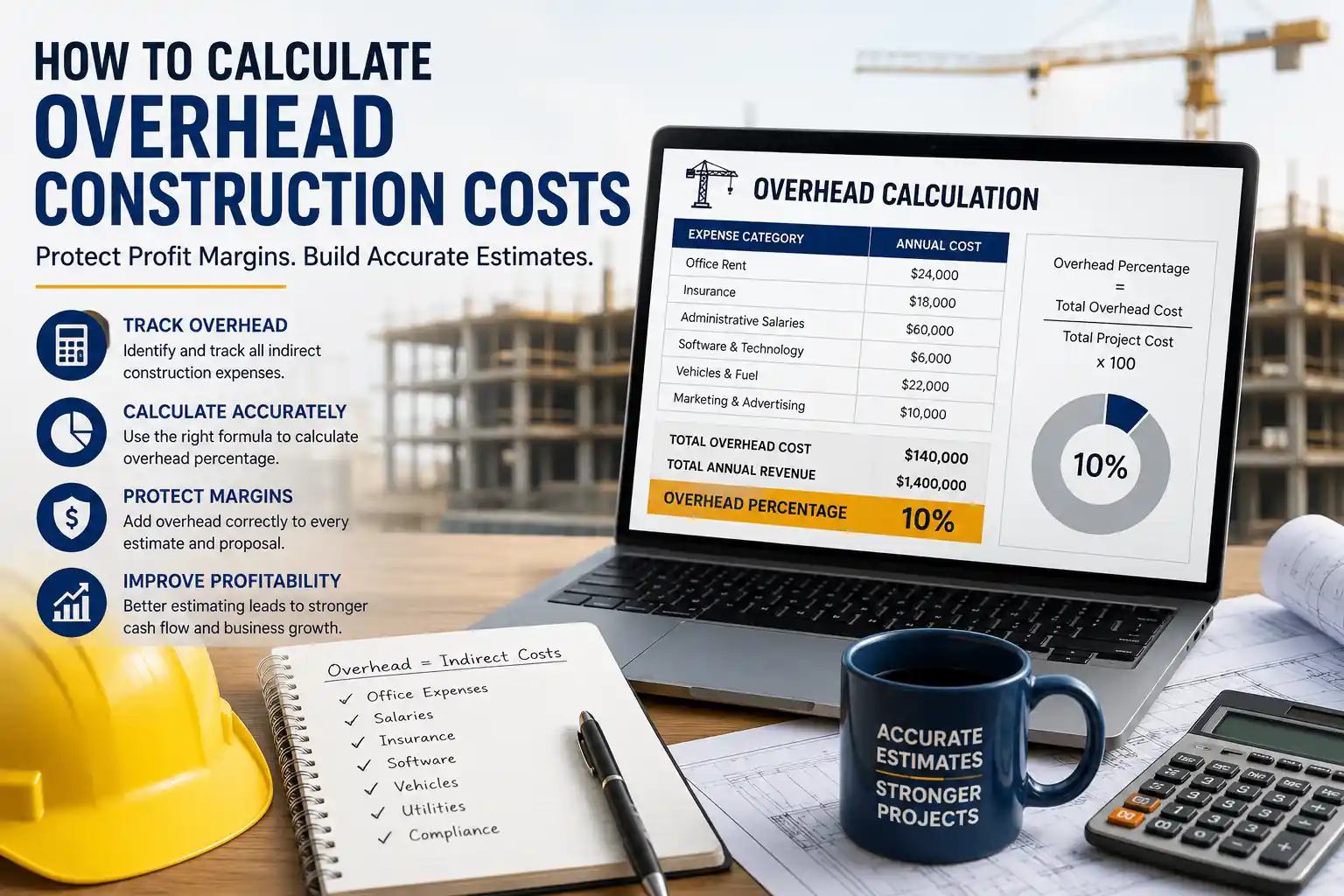
How to calculate overhead construction costs is one of the most important questions contractors, estimators, and construction businesses face when creating accurate project estimates and protecting long-term profitability.
What Is Construction Overhead?
Knowing how to calculate overhead construction costs starts with understanding that construction overhead includes all indirect operational expenses required to run a construction business or manage a construction project successfully.
Unlike direct project costs such as labor, materials, equipment, and subcontractors, overhead supports operations behind the scenes.
Many construction businesses believe projects are profitable because direct costs are covered. However, ignored overhead silently reduces actual profit margins over time.
Common construction overhead expenses include:
- Office rent
- Administrative salaries
- Insurance costs
- Software subscriptions
- Project supervision
- Vehicle expenses
- Temporary utilities
- Safety compliance costs
Why Construction Overhead Matters
Construction overhead directly affects:
- Project profitability
- Bid accuracy
- Cash flow stability
- Financial planning
- Business sustainability
Contractors who fail to calculate overhead correctly often underprice projects and struggle financially during project execution.
Types of Construction Overhead
Construction overhead is generally divided into two major categories.
Project Overhead
Costs tied specifically to an active construction project such as temporary utilities, site offices, supervision, safety systems, permits, and cleaning.
Company Overhead
Operational expenses required to run the construction business overall including office rent, insurance, software, salaries, legal services, and marketing.
How to Calculate Overhead Construction Costs
The most common formula used to calculate construction overhead percentage is:
Overhead Percentage = (Total Overhead Cost ÷ Total Project Cost) × 100
Example:
| Expense Category | Annual Cost |
|---|---|
| Office Rent | $24,000 |
| Insurance | $18,000 |
| Administrative Salaries | $60,000 |
| Software & Technology | $6,000 |
| Vehicles & Fuel | $22,000 |
| Marketing & Advertising | $10,000 |
Total overhead = $140,000
If total annual revenue is $1,400,000:
(140,000 ÷ 1,400,000) × 100 = 10%
This means construction overhead represents 10% of the total project cost.
Common Overhead Calculation Mistakes
Many contractors underestimate overhead costs because they focus heavily on winning projects and competitive pricing.
- Poor expense tracking
- Manual spreadsheet calculations
- Ignoring operational expenses
- Fear of losing bids
- No financial planning system
Ignoring construction overhead creates underpriced projects, shrinking margins, cash flow problems, and long-term financial pressure.
Why Estimating Software Helps
Many contractors still try to calculate overhead construction costs using spreadsheets. However, spreadsheets often create formula errors, pricing inconsistencies, and workflow confusion.
Modern construction estimating software helps businesses:
- Apply overhead automatically
- Track profitability in real time
- Reduce manual calculation mistakes
- Generate accurate estimates
- Protect project margins
- Improve workflow visibility
Additional Construction Estimating Resources
Learn more about construction estimating best practices from:
Frequently Asked Questions About Construction Overhead
Construction overhead includes indirect operational expenses required to run a construction business or manage projects successfully.
Construction overhead percentage is calculated by dividing total overhead costs by total project costs and multiplying by 100.
Construction overhead affects profitability, estimate accuracy, pricing consistency, and long-term business sustainability.