
 QuickEstimate Team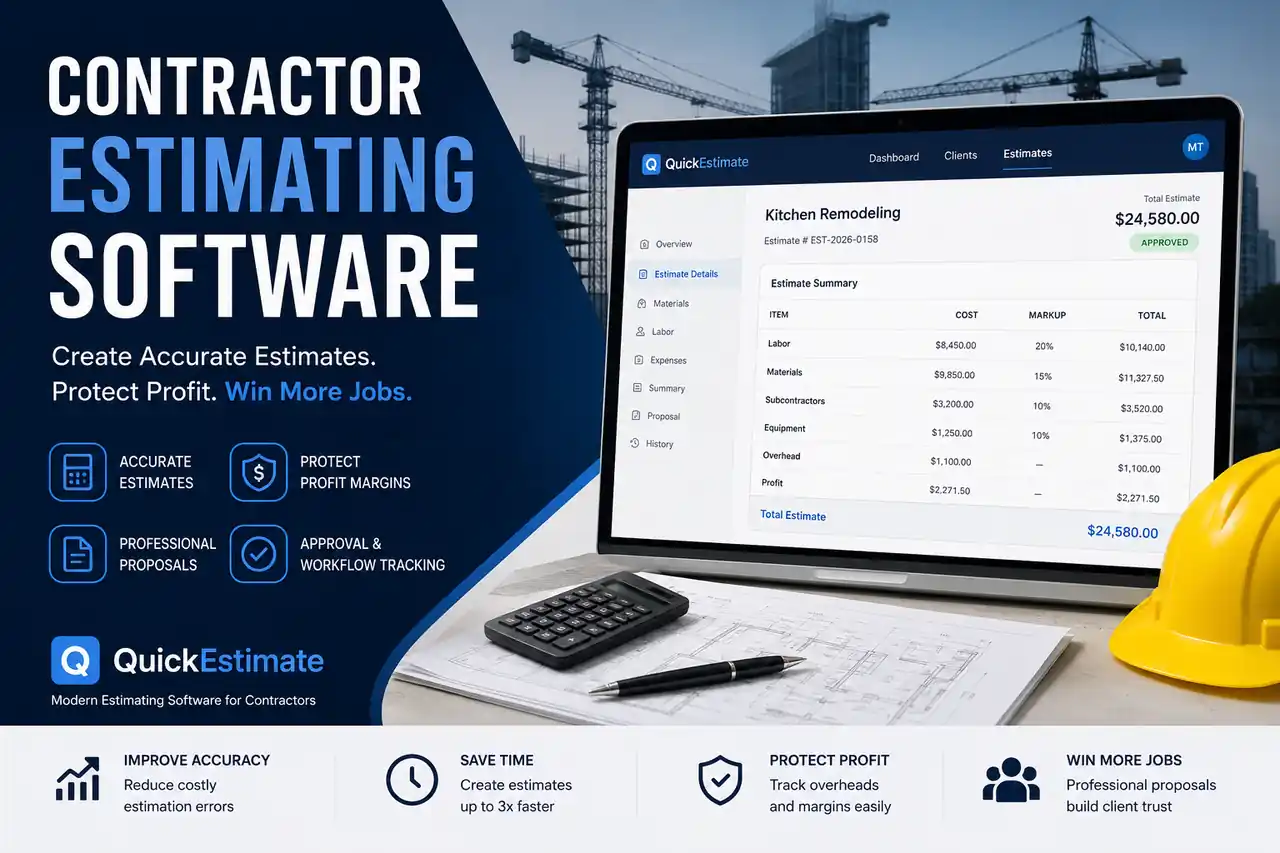
Contractor estimating software helps modern construction businesses create accurate estimates, organize project costs, protect profit margins, and generate professional proposals faster using structured estimating workflows.
68%
22%
$15K+
0
What Is Contractor Estimating Software?
Contractor estimating software is a digital system designed to help construction businesses create estimates, organize costs, track overhead, generate proposals, and improve operational workflows.
Unlike spreadsheets, this kind of platform creates structured workflows that improve estimate consistency, reduce pricing mistakes, and help contractors organize project information professionally.
Modern platforms like this replace disconnected spreadsheets and manual calculations with centralized workflows designed for real-world construction businesses.
Most modern platforms help businesses organize:
- Material costs
- Labor pricing
- Equipment expenses
- Subcontractor quotes
- Proposal generation
- Estimate revisions
- Workflow approvals
- Profit margin tracking
Why Contractors Need Contractor Estimating Software
Construction estimating directly affects profitability, workflow organization, project visibility, and long-term business growth.
Contractors relying only on spreadsheets often struggle with:
- Missed scope items
- Manual formula errors
- Disorganized proposal workflows
- Inconsistent pricing
- Poor revision tracking
- Untracked profit margins
This kind of software helps businesses improve estimate accuracy, protect profit margins, generate professional proposals faster, and reduce spreadsheet dependency.
Why Contractors Are Replacing Spreadsheets With Contractor Estimating Software
Spreadsheets may appear flexible initially, but they become difficult to maintain as projects, clients, and operational complexity increase.
| Spreadsheet Problems | Business Impact | Result |
|---|---|---|
| Manual calculations | Pricing inconsistencies | Reduced profitability |
| Missed scope items | Budget overruns | Project risk |
| No workflow structure | Disorganized approvals | Operational confusion |
| Digital estimating software | Structured workflows | Accurate estimating |
Key Features Contractors Should Look For in Contractor Estimating Software
The best solution should improve estimate accuracy, workflow visibility, proposal generation, and profit protection.
- Automatic overhead calculation
- Real-time profit margin tracking
- Professional proposal generation
- Client approval workflows
- Estimate revision tracking
- Saved materials libraries
- Subcontractor management
- Searchable project history
Benefits of Contractor Estimating Software
Contractors using it improve workflow organization, proposal quality, estimate accuracy, and operational visibility.
Businesses that standardize estimating workflows often improve consistency, reduce pricing mistakes, and create more scalable operations.
These platforms help businesses:
- Create estimates faster
- Improve estimate accuracy
- Protect project margins
- Reduce manual calculations
- Improve workflow organization
- Generate professional proposals
Why Contractors Choose QuickEstimate Contractor Estimating Software
QuickEstimate is a modern platform designed specifically for contractors, remodelers, subcontractors, and construction businesses.
QuickEstimate helps businesses:
- Create accurate construction estimates
- Track overhead automatically
- Protect profit margins
- Generate branded proposals
- Manage revisions professionally
- Track estimate approvals
- Organize project workflows
Additional Construction Estimating Resources
Learn more about construction estimating best practices from:
Ready to see it in practice? Explore QuickEstimate’s contractor estimating software, which prices labor, materials, overhead and profit for you and turns every estimate into a proposal your client can approve online.
Frequently Asked Questions About Contractor Estimating Software
This kind of software helps construction businesses create estimates, organize project costs, generate proposals, and improve workflow management digitally.
Yes. Modern estimating tools replace spreadsheets with structured workflows that improve organization, estimate accuracy, and profitability.
Overhead tracking helps contractors recover operational expenses and avoid underpriced projects that reduce long-term profitability.