
 QuickEstimate Team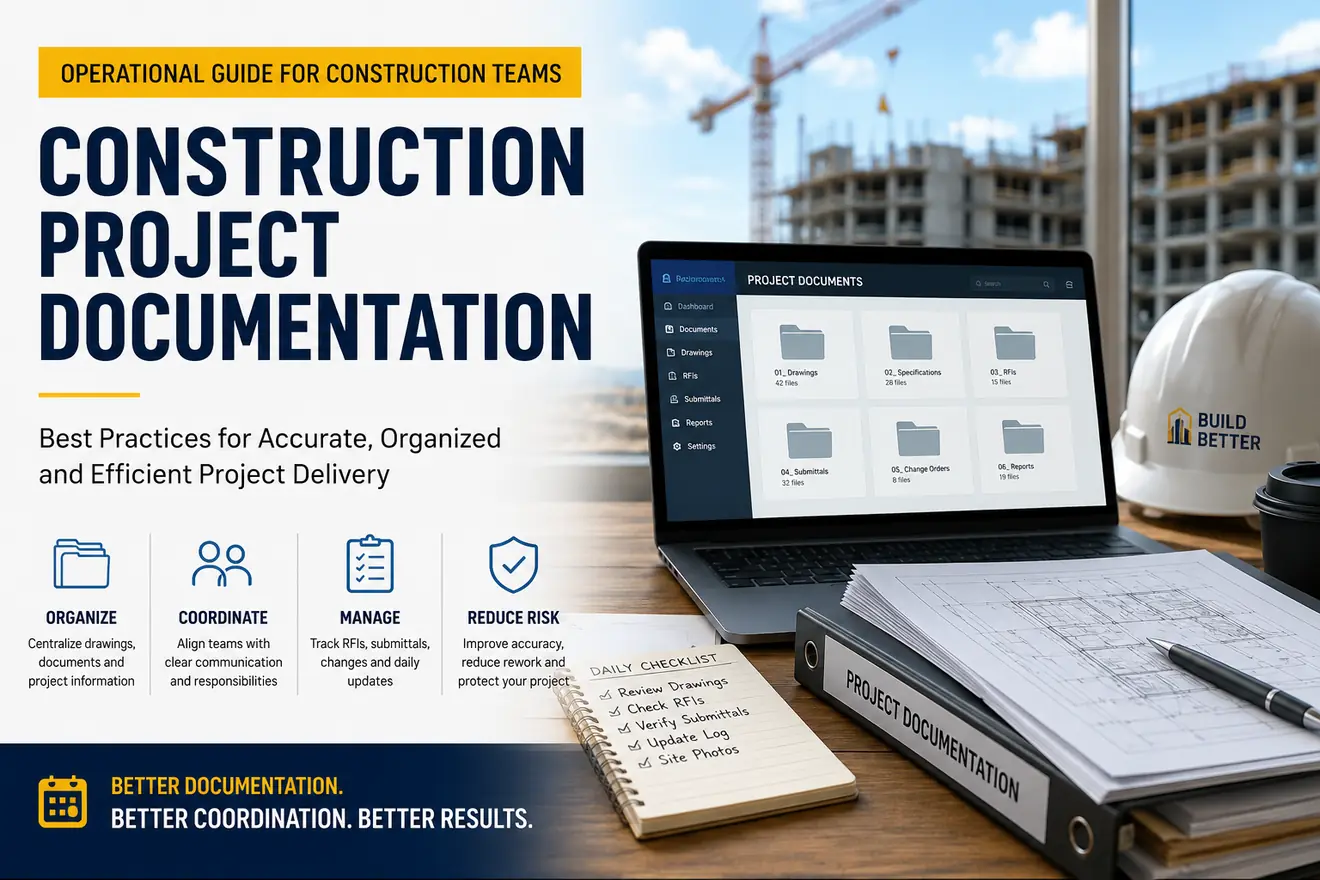
These operational and documentation challenges are connected to broader
Construction Estimation & Operational Workflow Issues →
Construction project documentation plays a critical role in modern construction workflows, contractor coordination, budgeting, communication, and operational efficiency.
Poor documentation systems often create project confusion, rework, delays, disputes, budget overruns, and operational inefficiencies across residential and commercial construction projects.
Construction documentation helps contractors, estimators, architects, project managers, field teams, and clients maintain organized communication and improve project execution throughout every stage of construction.
Why Construction Project Documentation Matters
Modern construction projects involve multiple teams, contractors, suppliers, subcontractors, managers, architects, and clients working together simultaneously.
Without proper documentation systems, communication gaps quickly create operational problems and project confusion.
- Track project decisions clearly
- Reduce misunderstandings between teams
- Improve coordination across departments
- Maintain accountability throughout workflows
- Improve project visibility and communication
- Manage revisions and updates effectively
Many construction problems are not caused by labor quality alone — they are caused by poor communication, inconsistent documentation, and disconnected workflows between teams.
What Is Included in Construction Project Documentation?
Construction documentation may include:
- Construction drawings
- CD sets
- Specifications
- RFIs
- Submittals
- Change orders
- Schedules
- Daily reports
- Site photos
- Material tracking records
- Budget records
- Contract documents
Proper organization and accessibility of these documents is essential for maintaining operational control and project visibility.
Common Construction Documentation Problems
1. Disconnected Workflows
Many construction firms still manage projects using disconnected systems:
- Manual spreadsheets
- Email chains
- Paper notes
- Separate software platforms
This often creates confusion between project stakeholders and operational teams.
2. Inconsistent Documentation Standards
Different project teams frequently use:
- Different naming conventions
- Different file structures
- Different coordination methods
- Different workflow systems
Inconsistent standards slow collaboration and reduce operational clarity significantly.
3. Poor Communication Between Teams
When project information is not documented clearly:
| Documentation Gap | Operational Result |
|---|---|
| Missing project visibility | Scope misunderstandings |
| Unclear revisions | Coordination errors |
| Poor communication | Increased rework |
| Disconnected approvals | Project delays |
Why Contractors Value Organized Construction Project Documentation
Contractors rely heavily on organized documentation systems to:
- Manage project risks
- Track revisions accurately
- Clarify scope changes
- Coordinate subcontractors
- Reduce operational disputes
- Improve project scheduling
Strong documentation systems improve confidence and coordination across all construction stakeholders.
Construction Documentation & Workflow Efficiency
Efficient documentation systems help construction companies:
- Reduce repetitive administrative work
- Improve workflow visibility
- Maintain operational consistency
- Improve collaboration between teams
- Scale project operations more effectively
Many construction businesses are moving toward centralized workflow systems instead of relying entirely on disconnected manual processes.
How Construction Documentation Impacts Profitability
Poor documentation often creates:
- Budget overruns
- Scope misunderstandings
- Project delays
- Rework costs
- Contractor disputes
- Operational inefficiencies
Accurate and organized documentation improves:
- Budget control
- Project coordination
- Workflow management
- Operational decision-making
- Long-term business scalability
How Construction Teams Improve Documentation
Standardize workflows
Create consistent file structures, documentation guidelines, and naming systems across projects.
Centralize project information
Reduce disconnected tools and improve shared visibility between departments and stakeholders.
Improve communication
Document revisions, responsibilities, approvals, and project decisions clearly.
Use modern workflow systems
Adopt digital documentation systems, workflow platforms, and operational tracking tools.
Why Modern Construction Firms Prioritize Documentation
As projects become more complex, documentation has become essential for:
- Project scalability
- Operational consistency
- Team coordination
- Construction quality control
- Contractor accountability
Modern digital platforms help construction companies improve project visibility, operational coordination, estimating systems, and workflow management through centralized processes.
Strong construction documentation reduces confusion, improves coordination, and helps projects run more efficiently from planning through project completion.
Frequently Asked Questions
Construction project documentation includes drawings, specifications, RFIs, contracts, schedules, reports, change orders, and workflow records used throughout construction projects.
Construction documentation improves communication, coordination, accountability, budgeting, workflow visibility, and operational efficiency while reducing project risks and disputes.
Poor documentation often creates scope confusion, project delays, rework, contractor disputes, coordination issues, and budget overruns.
Construction firms improve workflows by standardizing systems, centralizing project information, improving communication, and using modern digital workflow platforms.